%20(1640%20x%20650%20px)%20(1640%20x%20500%20px).png)
How the Hormuz Crisis Unfolds and the Ripples from Escalation
I. How We Got Here
Operation Epic Fury was not sparked by a specific Iranian act but by a perceived window of vulnerability. Internal unrest, a sanctions-induced economic breakdown, and degraded air defences made Iran appear susceptible to regime pressure. The campaign began with overwhelming force, including the targeted killing of Supreme Leader Ali Khamenei. Yet Iran did not capitulate — it adapted.
II. The Mosaic Defence
Iran's military structure, reorganised in 2005, enables autonomous provincial IRGC units to operate without central command. This decentralisation has allowed continued missile launches and resistance despite leadership losses.
The unforgiving Zagros Mountains and fortified infrastructure blunt the reach of air power and would turn any potential ground assault into a punishing ordeal.
III. Strait of Hormuz: Strategic Chokepoint
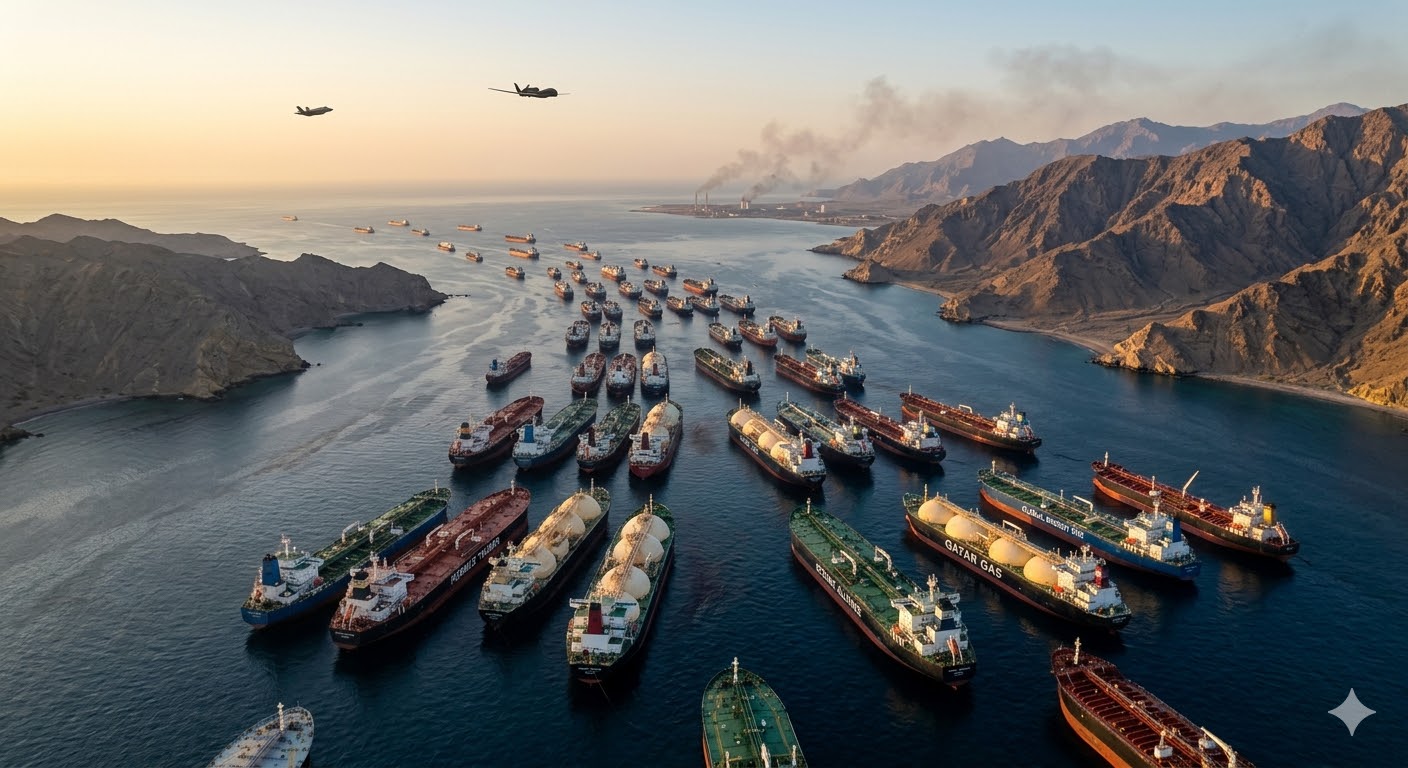
The Strait remains closed to most traffic, enforced by IRGC attacks and naval mines. Insurance suspensions and selective passage permissions have rendered the route economically unviable. Over 150 tankers remain anchored amid the risk of Iranian attack. By late March, around 21 attacks on merchant ships — including oil tankers, cargo ships, and bulk carriers — have been recorded in the Strait.
Commodity Impacts
IV. Munitions and the Taiwan Variable
Iran's strategy of exhausting high-cost US interceptors with cheap drones is proving effective. US munitions stockpiles are under pressure, raising concerns about readiness in other theatres, particularly Taiwan.
China, while rhetorically critical of the strikes, remains cautious due to its Gulf trade interests and domestic economic constraints.
Updated Scenarios
Trump's deadline extension suggests Scenario A remains possible, but Iran's demand for security guarantees and the absence of direct dialogue make it tenuous. Scenario B remains dominant, with continued economic disruption and strategic strain the baseline expectation.
VI. Planning Implications
Energy & Commodities
Oil is likely to remain above $100/barrel through Q2; contingency planning for $130+ is advised. LNG contracts face force majeure clauses; fertiliser costs threaten food security across import-dependent markets.
Supply Chain
Cape rerouting adds 10–14 days to transit times; port congestion is expected to compound delays. Helium and petrochemical shortages are creating cascading impacts across multiple sectors:
- Helium is critical to chipmaking — used in cooling lithography equipment, ensuring precision in etching and deposition, and maintaining stable thermal environments in fabrication plants. It is non-substitutable: no viable alternative gas offers similar inertness and thermal stability. Qatar supplies almost a third of global helium; the Ras Laffan shutdown removed 5.2 million cubic metres per month from the market. Prices have doubled since late February 2026, forcing fabs to ration usage and delay production. Chip shortages flow downstream to smartphones, laptops, automotive electronics, and defence systems. Countries heavily reliant on imports — such as Singapore — face acute strategic vulnerability in their tech supply chains.
- Petrochemicals, the backbone of plastics, synthetic fibres, detergents, and packaging materials, are driving up costs across consumer goods. Disruptions are hitting electronics and appliances, creating food and beverage packaging bottlenecks, and delaying production of critical medical devices and disposable medical supplies.
Geopolitical Risk
Conclusion
This crisis is not simply about energy — it is a crucible testing whether air power alone can dismantle a regime built for survival and counter-offence. Iran's decentralised resistance, hardened geography, and calculated patience have kept it firmly in the fight. As the war grinds on without political resolution, the question evolves from 'Will Iran capitulate?' to 'What shape will a post-war Middle East — and global order — take, and who will command it?'
That future, if it arrives, will be forged not only by missiles and sanctions, but by decisions taken in a narrowing window of opportunity. The choices of regional powers, global actors, and Iran's own leadership will determine whether the outcome is collapse, transformation, or a prolonged cycle of instability that reshapes the balance of power far beyond the Gulf.


.svg)